
Your streaming experience relies on what happens behind the scenes. An iptv headend is like the brain of your entertainment system. It captures, processes, and sends video content to every corner of your property.
The market for commercial entertainment is growing fast. It’s expected to jump from USD 3.8 billion in 2026 to USD 7.9 billion by 2033. This shows that businesses know quality broadcast systems are key to happy guests and lower costs.
Todd Small, CEO of PulseNetTV, says, “A solid headend system is the base of every top-notch commercial TV experience. It’s crucial for hotels, hospitals, and senior living places to offer smooth entertainment.”
Choosing the right iptv headend today sets your business up for success tomorrow. It cuts down on costs, makes management easier, and prepares you for growth. Whether you have 50 or 500 rooms, a good headend ensures smooth streaming or avoids annoying breaks.
This guide covers all you need to know about picking, setting up, and using an iptv headend system in 2026. You’ll see how it powers hotels, hospitals, senior living, and corporate spaces. Most importantly, you’ll find out how the right system boosts your business’s profits and keeps you ahead of the competition.
Table of Contents
What is an IPTV Headend and Why It Matters for Modern Broadcasting
An IPTV headend is the heart of your TV network. It’s where all signals come together, get sorted, and then go out to every TV in your place. It handles content from satellites, cable, antennas, or the internet all in one spot.
Without a headend, you’d need a receiver in every room. This gets pricey and hard to keep up with as your space grows. A headend collects signals at one spot, then sends them to many places.
The big benefits are:
- Big savings on hardware and setup costs
- Easier to manage and update content
- Consistent, reliable signal quality everywhere
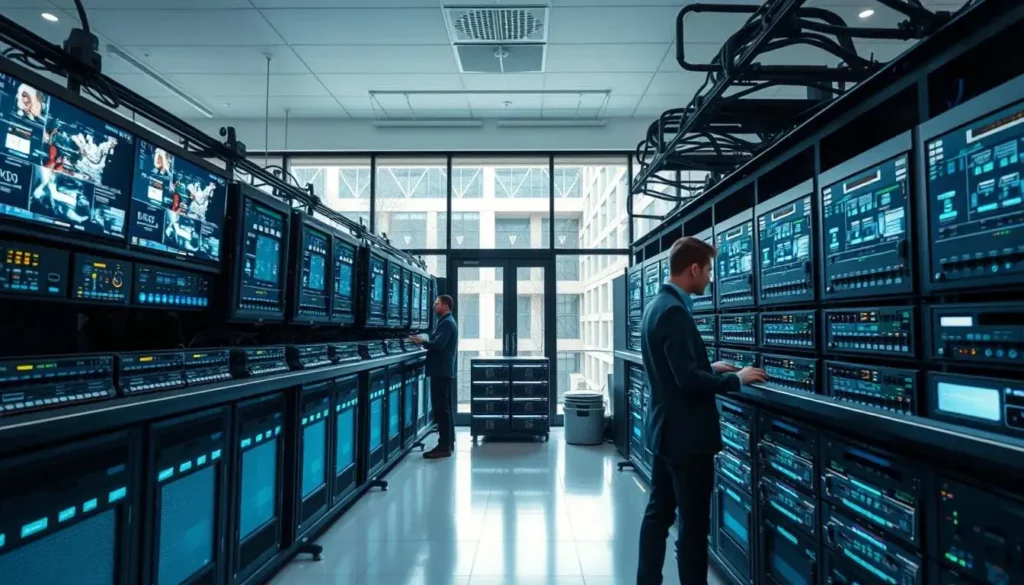
Understanding Headend Architecture in Digital Television
Your headend’s design is key to how signals move through your system. Modern setups use parts that work well together. These include encoders, decoders, multiplexers, and modulators.
This setup is in a safe place, protecting your gear and keeping it tidy. Signals follow a clear path:
- They come in from different sources
- Equipment decodes and processes them
- Systems organize channels
- Ready signals go out to your property
The Role of Headend Equipment in Content Distribution
Your headend equipment is crucial for a good video system. It includes satellite receivers, encoders, processors, amplifiers, and switches. Each part has a specific job in getting content to your screens.
For example, a 200-room hotel needs a lot of receivers without a headend. This means lots of parts to manage, maintenance visits, and replacing gear in many places. With a headend, your whole property gets the same content from one spot.
| Headend Equipment Type | Primary Function | Impact on Your System |
|---|---|---|
| Satellite Receivers (IRDs) | Captures satellite broadcast signals | Brings external content into your network |
| Encoding Platforms | Converts video into digital streams | Enables efficient content delivery |
| Channel Processors | Organizes and manages channel lineups | Simplifies viewer navigation |
| Distribution Amplifiers | Strengthens and extends signals | Reaches distant rooms clearly |
| Distribution Switches | Routes content to different zones | Provides flexible content control |
This central approach saves a lot on equipment and cuts down on maintenance time. Your team only needs to manage one place. Changes are made once, benefiting everyone right away.
Understanding your headend architecture and equipment needs is your first step toward building a scalable video distribution system that grows with your business.
How IPTV Headend Systems Work: Technology Behind the Scenes
Your IPTV headend system works by turning various content sources into clear signals for viewers. Knowing how it works helps you pick the best iptv encoding platform for your needs.
The process starts with content acquisition. Your headend gets many input sources at once. These include satellite feeds, cable TV, local broadcasts, and internet streams. This ensures your property always has plenty of programming.
Then, the encoding and transcoding stage happens. Your iptv encoding platform changes these formats into ones your network can handle. It turns MPEG-2 signals into H.264 or H.265 for better quality and less bandwidth use.
Your iptv encoding platform also adjusts bitrates automatically. This keeps playback smooth, even when the network is busy. It supports two main streaming types:
- Multicast streaming — sends the same live channel to many viewers efficiently
- Unicast streaming — gives personalized on-demand content to each user
After that, channel mapping and customization happen. Your team can set up special channel lineups for different areas. For example, VIP suites get premium sports, while family rooms have kid-friendly shows.
Finally, the signals are sent out across your property. The method depends on your current setup:
| Distribution Method | Best For | Key Advantage |
|---|---|---|
| Coaxial Cable | Existing legacy systems | Works with old equipment |
| Fiber Optics | Large properties | Transmits signals over long distances |
| Ethernet/IP Delivery | Modern digital properties | Uses data networks |
| Hybrid Networks | Mixed-infrastructure properties | Uses different delivery methods |
Picking the right iptv encoding platform ensures your content looks great on every screen. Your headend is key to your broadcast system, handling everything from start to finish.
Essential Components of a Professional Video Distribution System
To build a reliable video distribution network, you need to know each key part. These parts work together to get content to your viewers. You’ll need to pick the right equipment to capture, process, and send out signals across your property.
Whether it’s for a hotel or a hospital, each piece of equipment has its role. This is crucial for your system’s success.
Quality equipment is the base of your system. It can handle many channels at once. Investing in good components now saves you from expensive upgrades later. It also lets your system grow with your property.
Satellite Headend System Integration
Your system starts with receiving equipment that gets signals from space. Satellite dishes collect these signals. Low-noise block downconverters (LNBs) then make these signals usable.
Your integrated receiver decoders (IRDs) process encrypted content from providers like DIRECTV and DISH Network.
Commercial IRDs are different from home ones. They can send content to many rooms legally. DIRECTV’s commercial systems are made for big properties needing to send content to hundreds of rooms.
- Satellite dishes sized appropriately for your location
- Commercial IRDs that support multi-room distribution
- LNB configurations for capturing multiple satellite positions
- Rack-mounted receivers for centralized installation
- Backup power systems for continuous operation
IPTV Encoding Platform Requirements
Your encoding platform turns satellite, cable, or antenna signals into IP streams. Encoders and transcoders do this conversion. They make broadcasts ready for viewers on different devices.
Your multichannel video headend organizes channels into groups. Channel processors add parental controls and local programming. They also manage electronic program guide (EPG) data. Amplifiers keep signal strength steady, and multiplexers combine streams into paths.
| Component | Function | Key Consideration |
|---|---|---|
| Encoders/Transcoders | Convert signals to IP-ready formats | H.264 or H.265 codec selection |
| Channel Processors | Organize and customize channels | Support for hundreds of channels |
| Amplifiers | Ensure signal strength consistency | Coverage across entire property |
| Multiplexers | Combine multiple streams | Low-latency performance |
| Rack-Mounted Systems | Centralized installation and maintenance | Easy scalability and future expansion |
Your encoder choice affects both quality and bandwidth. Low-latency encoding is key for live sports and news. It ensures your viewers see events as they happen. Bitrate management balances quality and network capacity, letting you serve more rooms without strain.
Choosing the right components now saves you from expensive upgrades later. Your system will thrive when each part works well together in your plan.
IPTV Headend vs Traditional Cable TV Infrastructure
Understanding the differences between IPTV headend systems and traditional cable TV infrastructure is key. Both deliver video content but use different technologies. Your choice affects costs, flexibility, content options, and future expenses.
A digital TV headend using traditional cable architecture gets content from cable providers through coaxial connections. It then redistributes signals using RF modulation over existing coax wiring. This is great for places with existing coaxial infrastructure, like apartment buildings and offices. It saves on installation costs if wiring is already there.
IPTV headend systems convert content into IP streams delivered over Ethernet networks. This modern method offers more control over content and personalization. It’s more flexible than traditional cable systems.
Quality of service is a big difference between these technologies:
- IPTV uses managed private networks for better bandwidth and less buffering
- Traditional cable systems have limited interactive capabilities
- IPTV supports video-on-demand and customizable content
- Cable systems offer basic channel distribution
IPTV requires a higher upfront investment but avoids recurring fees. Traditional cable systems have ongoing monthly costs. Your choice depends on whether you value initial savings or long-term flexibility.
Hybrid approaches are good for some properties. You can keep coaxial infrastructure for basic channels and add IP-based delivery for premium features. This balances your investment and future upgrades.
| Feature | IPTV Headend | Traditional Cable TV |
|---|---|---|
| Network Type | Managed private networks with guaranteed quality of service | RF modulation over coaxial infrastructure |
| Content Flexibility | Full customization with VOD and interactive features | Limited to cable provider channel lineups |
| Installation Cost | Higher upfront investment for new infrastructure | Lower if existing coax wiring present |
| Recurring Costs | Minimal per-room fees after setup | Monthly fees per room to cable providers |
| Scalability | Excellent for expansion and customization | Limited expansion capabilities |
| Buffering Risk | Minimal with bandwidth guarantees | Rare but possible with RF distribution |
Planning new infrastructure or major renovations? IPTV offers superior long-term value and flexibility. Properties with existing coaxial infrastructure might prefer hybrid approaches. Consider your property size, guest expectations, and growth plans when choosing the best system.
Building a Scalable Streaming Server Infrastructure for Commercial Properties
Creating a strong streaming server infrastructure for your commercial property needs careful planning and the right technology. Whether it’s a hotel, hospital, senior living facility, or corporate campus, your system must provide reliable entertainment and information to many users at once. A well-designed system grows with your business without needing expensive overhauls.
First, understand your property’s unique needs. Large hotels and resorts use digital headends for TV systems to deliver entertainment across hundreds of rooms. Hospitals need stable in-room patient entertainment and informational channels. Senior living facilities use these systems for reliable TV access that impacts resident comfort and satisfaction. Corporate environments use them in meeting rooms, lounges, cafeterias, and lobby displays.
The investment in proper streaming server infrastructure pays off quickly. For example, a 50-room hotel using 50 DSTV boxes spends $2,000 monthly. Switching to one encoder costs $499 as a one-time investment, reducing costs by 90%. The return on investment arrives within the first month.
Your streaming server infrastructure must handle peak demand during evening hours when occupancy reaches its highest levels. Load balancing distributes viewer requests across multiple servers, ensuring smooth performance. Redundant servers prevent single points of failure that could take your entire system offline.
Multichannel Video Headend Configuration
Setting up multichannel video delivery requires organizing your channels into logical categories. Your system should group channels by type—news, sports, entertainment, international, and premium content. This organization helps your guests navigate easily and find what they want to watch.
Implementing conditional access controls which channels viewers can access based on their subscription level. Your streaming server infrastructure uses multicast groups to reduce network bandwidth consumption when delivering popular live channels to many simultaneous viewers. Electronic program guide data helps guests understand what’s playing on each channel.
- Organize channels into clear categories for easy navigation
- Set up conditional access for premium content tiers
- Manage electronic program guide data efficiently
- Configure multicast groups to reduce bandwidth use
- Monitor channel performance and viewer engagement
Digital TV Headend Setup for Hotels and Hospitals
Hotels and hospitals need specialized configurations for their unique operations. Your hotel’s streaming server infrastructure should include welcome channels with property branding, promotional content for on-site restaurants and spas, local attraction information, and customizable guest messaging.
Hospital systems require different approaches. Your digital TV headend setup should feature educational health content, multilingual programming for diverse patient populations, pediatric channels for children’s wards, and integration with nurse call systems and patient information displays.
| Property Type | Key Features | Priority Content | Integration Needs |
|---|---|---|---|
| Hotels | Welcome channels, property branding, guest promotions, local information | Entertainment, news, sports, on-demand movies | Guest management systems, billing integration |
| Hospitals | Educational health content, multilingual programming, pediatric channels | Patient education, health information, wellness content | Nurse call systems, patient information displays |
| Senior Living | Accessible interfaces, health programming, community events | News, classic entertainment, health education | Resident management systems, activity scheduling |
| Corporate | Meeting room displays, digital signage, company messaging | News, business channels, corporate communications | Network infrastructure, employee directories |
Building your streaming server infrastructure today determines whether adding 100 new rooms requires minor configuration changes or a complete system overhaul. Invest in scalability now and avoid expensive retrofits later.
Key Benefits of Centralized Broadcast Infrastructure
Getting a centralized broadcast system changes how you manage content for guests or patients. Instead of having receivers in each room, all signals come from one place. This makes things better for operations, money, and how happy your guests are.
Your team can control everything from one place. Changing channels or adding welcome screens is quick. In a big hotel, what used to take hours now takes just minutes.
There’s a big saving right away. No need for many set-top boxes means less money spent upfront. A big hotel might save $15,000 on equipment instead of spending more on separate units. Also, using one big system means less power used overall.
Operational and Financial Advantages
Fixing problems is easier from one spot. If a channel goes out, finding the issue is quick. This means fixing it for everyone at once, not room by room.
Adding more rooms is easy with the right system. Growing from 50 to 500 rooms doesn’t disrupt much. Your initial investment grows with your property.
- Consistent HD quality reaches every guest room simultaneously
- Audio clarity remains uniform across all viewing locations
- Channel reliability improves with professional-grade equipment
- Guest satisfaction increases when service quality never varies
| Benefit Category | Centralized Broadcast Infrastructure | Distributed Receiver Model |
|---|---|---|
| Initial Equipment Cost (100 rooms) | $15,000 | $30,000+ |
| Annual Energy Consumption | Low (single headend) | High (hundreds of receivers) |
| Channel Update Time | Minutes (all rooms) | Days (room by room) |
| Troubleshooting Location | Central control point | Individual rooms |
| Scalability for Expansion | Minimal system changes | Major infrastructure overhaul |
| Picture Quality Consistency | Uniform across property | Varies by location |
Your investment in broadcast infrastructure pays off quickly. You save money on equipment right away. Less maintenance and cooling costs also help.
Happy guests mean a better reputation. Everyone gets the same quality, no matter where they are. This stops complaints and boosts your image.
Choosing the Right IPTV Headend Solution for Your Business in 2026
Choosing the right headend equipment for your business is a big decision. You need to think about your property size, current setup, budget, and future plans. Looking at the total cost of ownership helps you understand the real cost of your investment.
It’s not just about comparing prices. You also need to consider how new technology fits with what you already have. Think about the content delivery method you need and if your vendor offers the support you require. This helps you make choices that align with your business goals.
Evaluating Headend Equipment for Different Property Sizes
The size of your property affects the type of headend equipment you need. A small hotel needs different technology than a large resort. Knowing this helps you avoid spending too much or too little.
Smaller properties do well with compact systems that support 30 to 50 channels. These systems are reliable and easy to manage. Larger properties need more advanced systems with many channels and tools for managing content.
When evaluating your needs, consider these points:
- How many channels you want to offer guests
- If you need premium sports packages and content
- If you have guests from different countries who want international programming
- If you want to show off your property with custom welcome channels
- If you want a video-on-demand library
- How many rooms you have and if you plan to grow
Modular headend designs are a smart choice. They start small and can grow with your needs. This way, you don’t buy too much equipment too soon.
Budget Considerations and Total Cost of Ownership
The price you pay upfront is just part of the story. You also need to think about installation, programming fees, maintenance, energy use, and future upgrades. This helps you find the best value over time.
| Cost Category | IPTV Headend System | Traditional Cable System |
|---|---|---|
| Equipment Purchase | $25,000 | $15,000 |
| Installation & Configuration | $3,500 | $2,000 |
| Monthly Recurring Costs (100-room property) | $800 | $5,000 |
| 18-Month Total Cost | $32,900 | $105,000 |
| Cost Savings | Baseline | IPTV saves $72,100 |
IPTV services offer flexible pricing that changes with your needs. You can choose plans based on the number of devices and how long you commit.
| Device Plan | 1 Month | 12 Months (Annual) | Annual Savings vs Monthly |
|---|---|---|---|
| 1 Device | €20 | €65 | Up to 73% savings |
| 2 Devices | €36 | €118 | Approximately 10% savings |
| 3 Devices | €51 | €165 | Approximately 15% savings |
| 4 Devices | €64 | €208 | Approximately 20% savings |
Choosing 12-month plans instead of month-to-month can save you a lot of money. This can make a big difference in your budget.
When budgeting, consider these factors:
- Costs for professional installation and setup
- Ongoing fees for programming and content
- Annual maintenance and support contracts
- Monthly energy costs for running the equipment
- Future costs for upgrades and replacements
- Training for your staff on the new equipment
Choosing the right vendor is crucial. Good headend equipment and support can save you money. Look for vendors that offer site assessments, system design, installation, training, support, and clear upgrade paths.
Contact specialized providers today via WhatsApp at +447380310123 to discuss your needs. They can give you tailored advice and pricing based on your property size and content needs. This way, you invest in the right solution, not just the cheapest or most features.
Common IPTV Headend Challenges and How to Overcome Them
Running an IPTV headend system has real challenges. These can disrupt your broadcast service. Knowing how to fix these issues keeps everyone happy. Your IPTV headend needs stable, fast internet to stream quality content without breaks.
Common problems include buffering, freezing, channel errors, and app crashes. These issues often come from not enough bandwidth, unstable internet, or old apps. Troubleshooting these problems helps find and fix them fast.
Identifying Common IPTV Headend Problems
Streaming services face many challenges that affect viewer experience. Buffering means your network can’t handle smooth playback. Freezing happens when your network gets too busy. Channel failures occur when certain channels won’t load.
Audio-video sync problems make what viewers see and hear not match. Here are some common issues:
- Buffering during playback indicates bandwidth limitations
- Freezing suggests network congestion or encoder issues
- Channel failures point to signal interruptions or expired licenses
- Sync problems reveal encoder configuration mistakes
- System crashes may indicate hardware overheating or software bugs
Quick Troubleshooting Steps for Your IPTV Headend
Start with simple fixes before diving into complex diagnostics. Check all cables and power connections. Make sure your subscription is active and paid.
Reset your router to fix temporary connection issues. Test your internet speed to ensure it meets IPTV needs. Clear app cache to remove slow-down files. Update playlists and subscription details often.
If problems continue, contact your IPTV service provider. They can check your subscription and signal quality.
Managing Bandwidth and Network Performance
Calculate your bandwidth needs based on viewer count and content quality. A 4K stream uses more bandwidth than standard definition. Use QoS rules to prioritize IPTV traffic.
Use multicast delivery for popular channels during busy times. Limit bitrate to prevent bandwidth overload. Schedule big transfers and updates at night when it’s less busy.
| Challenge Type | Common Cause | Solution |
|---|---|---|
| Buffering | Insufficient bandwidth or network congestion | Upgrade internet speed or implement QoS rules |
| Channel Failures | Source signal interruptions or expired licenses | Verify satellite alignment or renew content agreements |
| Audio-Video Sync Issues | Encoder configuration errors | Review encoder settings and recalibrate timing |
| System Crashes | Hardware overheating or software bugs | Check cooling systems and update firmware |
| Regional Content Blocks | Licensing and distribution restrictions | Maintain alternative content sources |
Understanding Latency and Content Limitations
IPTV headend systems have a 2-5 second delay compared to direct satellite. This delay is okay for most content but matters for live sports or news. Try to minimize this delay by optimizing your setup.
Content availability can change due to licensing and regional restrictions. Channels might disappear if agreements expire or if they’re blocked in certain areas. Keep multiple content providers to ensure service continuity.
Proactive Maintenance for Reliable Service
Regular system health checks can catch problems before they cause outages. Keep your software and firmware up to date for better performance and security. Always monitor your system’s performance to catch any issues early.
Having a good relationship with your IPTV headend vendor support team is key. They can help with complex issues quickly. Preventive maintenance is cheaper and keeps your service running smoothly.
Proper planning, vendor support, and troubleshooting make IPTV headend challenges manageable. The benefits of a smooth service far outweigh the occasional technical issue.
IPTV Headend Applications Across Hospitality, Healthcare, and Enterprise
Your IPTV headend system works for many industries with different needs. It powers entertainment in hotels, care in hospitals, and communications in offices. Each uses it in their own way to meet their goals and improve user experience.
Modern IPTV headend solutions are flexible. You can tailor features, content, and functionality to fit your needs. Whether you manage a hotel, healthcare facility, or office, your system becomes a key asset that adds value.
Hotel IPTV Systems with Customizable Features
Guests at your hotel expect a personalized experience. Modern IPTV headend systems offer customization. They can welcome guests by name, show messages in their language, and display your hotel’s logo.
Guest convenience gets a boost when your system integrates services into the TV. They can order room service, request housekeeping, and check out without calling the front desk. This makes staff’s work easier and guests happier.
Your system also opens up new revenue streams. Guests can buy hotel merchandise and local products. Premium video-on-demand content and local attraction promotions can also bring in extra money.
Cost savings are huge with channel sharing. Instead of buying 100 cable subscriptions, you can connect one to your encoder. This cuts costs by 90% in the first month.
- Multilanguage menu selection and guest detection
- Personalized welcome messages with guest names
- Custom hotel branding and visual themes
- Integrated live TV, VOD, music, and streaming services
- Hotel service displays including dining and housekeeping
- In-room shopping and order tracking
- Rolling weather updates and announcements
Patient Entertainment in Healthcare Facilities
Healthcare facilities need specialized video systems for therapy and information. Your IPTV headend shows patient education, pre-surgery instructions, and post-operative care. It also offers wellness content like meditation and gentle exercise.
Your system works well with hospital operations. It displays meal menus, schedules procedures, and provides nurse call functionality. Staff can access emergency alerts, training, and updates on facility-wide displays.
Senior living communities need accessible entertainment systems. Your IPTV headend ensures every resident enjoys TV, with large text, simple interfaces, and memory care programming. Community channels show activity schedules and events.
| Industry | Primary Use | Key Features | Business Impact |
|---|---|---|---|
| Hotels | Guest entertainment and services | Personalization, room service integration, in-room shopping | 90% subscription cost reduction, increased ancillary revenue |
| Hospitals | Patient care and education | Medical content, procedure scheduling, staff alerts | Improved patient outcomes, operational efficiency |
| Senior Living | Resident entertainment and community | Accessible interfaces, activity schedules, memory care content | Enhanced resident satisfaction and quality of life |
| Corporate | Communications and engagement | Digital signage, training, emergency notifications | Improved employee engagement and safety |
Corporate environments use your video distribution system in many ways. Conference rooms get presentations and training. Lobbies and cafeterias display digital signage and communications. Your system also broadcasts emergency notifications and safety updates instantly.
IPTV headend technology fits your needs, no matter your industry. Your investment in a video distribution system brings specific, measurable value. It can generate revenue, improve patient care, or enhance employee engagement.
Conclusion
Your commercial TV system is more than just a utility. It shapes how guests, patients, residents, and employees see your property every day. An IPTV headend is the key that makes this experience smooth or not. Investing in the right IPTV headend means big savings, better operation, and growth that lasts.
The numbers show a clear story. The global IPTV headend market is growing from USD 3.8 billion to USD 7.9 billion by 2033. This growth shows real value for properties in hospitality, healthcare, and business. Your IPTV headend gives consistent quality, cuts costs, and adds cool features like video-on-demand and personalized content.
Now is the best time to update your commercial TV system. Technology has improved, costs have fallen, and features have grown. Think about what you need, not just the price. Look at your property size, current setup, content needs, budget, and future plans. Work with experienced providers who get your industry’s challenges.
Ready to make your TV system a key asset? Contact PulseNetTV via WhatsApp at +447380310123 to talk about what you need. Get tailored IPTV headend advice and pricing for services starting at 20€ monthly. Your investment today will bring big wins in guest happiness, cost savings, staff work, and brand strength for years.
FAQ
What exactly is an IPTV headend and how does it differ from traditional cable television infrastructure?
An IPTV headend is a central hub that gathers TV signals from various sources. It processes and distributes content over Ethernet networks. Unlike traditional cable, IPTV uses IP streams for better customization and on-demand content.IPTV systems ensure smooth playback and offer interactive guides. They also provide personalized channels. Traditional cable systems have ongoing monthly fees, while IPTV requires a higher upfront cost but no recurring fees.
How much can I save by switching from individual set-top boxes to a centralized IPTV headend system?
Switching to IPTV can save a lot of money. For example, a 100-room property might spend $15,000 on a headend system. This is less than the $30,000+ for individual receivers.By using one subscription box, you can save 90% of the cost. This also reduces energy consumption and maintenance costs. It simplifies inventory management and technician dispatches.
What is the headend architecture and how do the different components work together?
The headend architecture is the central system for processing TV signals. It includes satellite receivers, encoders, multiplexers, and distribution switches. These components work together to deliver content to your property.Signal flow starts with source capture and decryption. It then goes through transcoding, channel organization, and distribution. This ensures quality content reaches your viewers.
What should I consider when evaluating an IPTV encoding platform for my property?
When choosing an IPTV encoding platform, consider codec selection and bitrate management. Look for low-latency encoding for live content. Evaluate encoder specifications based on your viewer count and content resolution.Ensure the platform supports multicast and unicast streams. It should integrate with your existing system and handle channel mapping. Dynamic bitrate adaptation is also important for smooth playback.
How does satellite headend system integration work and what equipment do I need?
Satellite headend integration starts with satellite dishes and LNBs. These capture signals, which are then decoded by commercial-grade IRDs. Use commercial-grade equipment for simultaneous distribution to many rooms.Your system design should consider dish sizing and LNB configurations. Proper rack-mounting is also crucial. This setup feeds into your IPTV encoding platform for distribution.
What is the complete signal workflow from content source to viewer’s screen in an IPTV system?
Content acquisition begins with various input sources. These include satellite feeds, cable signals, and IP streams. The IPTV encoding platform then converts these into standardized formats.Bitrate management ensures quality playback despite network congestion. The system handles both multicast and unicast streams. Channel mapping and customization allow tailored content for different areas.
How can a multichannel video headend configuration help me manage dozens or hundreds of channels efficiently?
A multichannel video headend organizes channels into logical groups. It applies conditional access and manages electronic program guides. This helps viewers navigate your offerings.Using multicast groups reduces bandwidth consumption for popular channels. This setup allows for parental controls and local programming. It also supports different channel packages for various areas.
What are the specific requirements for a digital TV headend setup in hotels versus hospitals?
Hotel setups focus on guest engagement and revenue generation. You’ll configure welcome channels and promotional content. Interactive services enable guests to order room service and check out through TV.Hospital setups prioritize patient needs and safety. They configure educational health content and multilingual programming. Integration with nurse call systems and patient information displays is also important.
Why should I choose IPTV headend technology over traditional cable systems for new installations?
IPTV offers superior long-term value and flexibility. While traditional cable might have lower upfront costs, IPTV is more cost-effective in the long run. IPTV provides greater control over channel lineups and personalized content.IPTV systems ensure quality of service and scalability. If you have existing coaxial infrastructure, a hybrid approach might be optimal. This balances ROI and future upgrade paths.
How do I size my streaming server infrastructure to handle current demand and future growth?
Calculate streaming capacity based on viewer count and content resolution. Implement redundant servers to prevent failures. Use load balancing for smooth performance during peak times.Start with current capacity but design for scalability. Ensure your network infrastructure can support future growth. Server redundancy ensures continuous service.
What are the major operational benefits of implementing centralized broadcast infrastructure?
Centralized systems simplify management and reduce costs. Instead of dispatching technicians, your team controls everything from one location. This reduces front desk workload and improves guest convenience.Interactive services and revenue-generating features enhance the guest experience. Sharing one premium channel subscription can save 90% of costs. This reduces energy consumption and maintenance costs.
How do I approach evaluating different IPTV headend solutions for my specific property?
Evaluate solutions based on your property size and complexity. Consider your current needs and future growth. Look for modular designs that can scale with your needs.Calculate the true cost of ownership, including equipment, installation, and ongoing fees. Choose a provider that offers comprehensive support and customization. Discuss your specific requirements with specialized providers.
What cost factors should I include in my total cost of ownership calculation for IPTV headend systems?
Include initial equipment cost, installation fees, and ongoing programming fees. Also, consider annual maintenance contracts and energy consumption. Don’t forget about future upgrade costs.Compare different pricing models, including flexible subscription options. Evaluate scenarios to find the most cost-effective solution. Consider indirect costs like staff training and energy savings.
What are the most common IPTV headend technical challenges and how can I prevent them?
Common challenges include buffering, channel failures, and audio-video synchronization issues. Use a systematic troubleshooting approach to address these problems.Implement quality-of-service rules and bandwidth management strategies. Regularly monitor your system for performance degradation. Address latency considerations and maintain alternative content sources.
How does IPTV headend technology improve patient experience and outcomes in healthcare facilities?
IPTV systems in healthcare provide therapeutic and informational content. They offer patient education, wellness programming, and pediatric channels. Integration with hospital systems improves patient autonomy and reduces staff workload.Staff communication and emergency alerts are also supported. Senior living applications focus on accessibility and cognitive support. This enhances resident satisfaction and quality of life.